How to Build a Simple Skincare Routine That Actually Works
Last Updated: November 22, 2026
Quick Summary
A simple skincare routine works because it does three jobs well: cleanse, moisturize, and protect from the sun during the daytime. That is the short answer. Everything else is a bonus.
Your morning routine should be short enough to finish in under three minutes.
Apply products from the thinnest texture to the thickest, so each layer absorbs.
Patch test behind your ear or inner forearm for 24 hours before full-face use.
Introduce one new product every two weeks so you know what caused a reaction.
Use an LED face mask after cleansing and before moisturizer, following the device's timing.
Not sure which products your skin needs?
SkinHappy Studio builds personalized skincare routines with licensed estheticians in a calm, private setting.
Table of Contents
Start With Three Steps, Not Ten
A simple skincare routine works because it does three jobs well: cleanse, moisturize, and protect from the sun during the daytime (the American Academy of Dermatology). That is the short answer. Everything else is a bonus.
Many people spend heavily on products they never finish. The pattern is common: too many steps, no clear order, and no idea what each product is supposed to do. A routine you actually follow beats a perfect one you abandon by week three.
Below, we break down how to build a simple skincare routine you can keep for years. We will show you the core steps, the optional extras, and how to introduce products without wrecking your skin barrier.
The Core Three: Cleanse, Moisturize, Protect
Dermatologists keep returning to the same message. As Dr. Morayo Adisa told Allure's skin care guidance, a simple routine has three jobs: cleanse, moisturize, and protect from the sun during the daytime.
Here is what each step does:
Cleanse: removes dirt, oil, and leftover product so the next steps can absorb.
Moisturize: holds water in the skin and supports the skin barrier.
Protect: sunscreen in the morning is a key step for helping to limit visible sun-related aging.
That is it. Three steps, twice a day, with sunscreen only in the morning.
What Counts as Optional
Optional steps add value when you have a specific goal. They are not required for healthy skin.
Toner: balances skin after cleansing and can add light hydration.
Exfoliation: smooths texture, once or twice a week at most.
Serums and treatments: target one concern, such as acne or fine lines.
Essence: a watery hydrating layer, popular but not essential.
LED face masks: a device step, covered further down.
If you want to adjust your lineup as the weather changes, see our guide on how to build a seasonal skincare routine that works.
Your Morning Skincare Routine in Order
Your morning routine should be short enough to finish in under three minutes. Order matters more than the number of products.
Cleanse. A gentle cleanser or just lukewarm water if your skin runs dry.
Treat. A toner or a light serum, if you use one.
Moisturize. A cream or gel that suits your skin type.
Protect. Sunscreen with SPF 30 or higher, every single morning.

If you want a concrete toner to slot in after cleansing, the Face Reality Moisture Balance Toner is a gentle option to look at.
Your Nighttime Routine and Where Actives Fit
Nighttime is when you repair. Cleansing matters more here because you are removing sunscreen, oil, and pollution from the day.
The basic order:
Cleanse. Twice if you wore heavy sunscreen or makeup.
Treat. This is where active ingredients go.
Moisturize. Seal everything in.
What most guides miss is how slowly actives should enter your routine. Retinol, acids, and vitamin C are strong. Start with one active, two nights a week, and build up. If you use retinol, our facial prep steps for retinol users walk through how to prepare skin before and after a facial.
Product Order: Thinnest to Thickest
Apply products from the thinnest texture to the thickest. Watery toners go first, then serums, then creams, then sunscreen. This lets each layer absorb instead of sitting on top of the last one.
A simple rule: if a product feels like water, it goes early. If it feels like a cream, it goes late.
Match Products to Your Skin Type and Concern
The right products depend on your skin type and your main concern. There is no universal best cleanser, and the fastest way to waste money is to buy a full lineup built for someone else's skin. Use the chart below to narrow your core three, then add optional steps only when you have a specific goal.
Skin type | Cleanser texture | Moisturizer texture | What to avoid |
Dry | Cream or milk cleanser, non-foaming | Cream or balm with ceramides or glycerin | Foaming gels, high-alcohol toners |
Oily | Gel or foaming gel cleanser | Lightweight gel or gel-cream, non-comedogenic | Heavy occlusive creams, pore-clogging oils |
Combination | Gentle gel cleanser | Gel-cream, applied heavier on cheeks | One heavy cream across the whole face |
Sensitive | Fragrance-free cream cleanser | Short ingredient list, fragrance-free | Essential oils, drying alcohols, physical scrubs |
Acne-prone | Gentle foaming or gel cleanser | Non-comedogenic gel moisturizer | Comedogenic oils, harsh scrubs, stacking actives |
A few mechanisms worth knowing, because they explain why a product either helps or backfires:
Ceramides and glycerin are humectant and barrier-supporting ingredients. They pull water into the skin and help hold it there, which is why they show up in most gentle moisturizers.
Foaming surfactants clean thoroughly but strip more oil. That is fine for oily skin and rough on dry or sensitive skin.
Non-comedogenic is a label claim, not a guarantee. It means the formula was designed not to clog pores, but your skin still decides.
Fragrance is the most common trigger for sensitive-skin reactions. Fragrance-free is a safer default than "natural" or "clean" marketing.
Your concern matters too, and it changes which optional step earns a place:
Fine lines: sunscreen daily plus consistent hydration does more than any single serum. Add a retinoid only after your core three are stable.
Dark spots: daily broad-spectrum sunscreen is the non-negotiable step. Without it, brightening products fight a losing battle.
Acne: consistency beats intensity. A gentle cleanser, a non-comedogenic moisturizer, and one targeted treatment used steadily outperform a ten-product stack.
Texture: a mild exfoliant once or twice a week, not daily, and never on the same night as a retinoid.
One honest limitation: a routine can only do so much on its own. For stubborn pigmentation or acne scarring, professional guidance saves months of guessing. You can browse the professional skincare lines we carry to see what is available for your skin type.
Patch Test First and Introduce One Product at a Time
Patch testing is the step almost everyone skips. It is also the one that prevents most bad reactions.
Here is how we recommend doing it:
Apply a small amount behind your ear or on your inner forearm.
Leave it for 24 hours without washing the area.
Check for redness, itching, or swelling.
If clear, use the product on a small area of your face for two days.
Then move to full-face use.
Introduce one new product every two weeks. If something goes wrong, you will know exactly what caused it. Adding three products at once makes that impossible.
When a Product Causes Irritation
Stop the product. That is the first move, and it is not negotiable. Most guides stop there, which leaves you guessing what to do next. Here is the full reset.
Signs that mean stop now:
Stinging or burning that lasts more than a minute after application.
Redness that does not fade within an hour.
Flaking, peeling, or a rough patch in the exact area you applied the product.
New breakouts clustered where you applied it, especially small uniform bumps.
Swelling, hives, or itching that spreads beyond the application site.
The reset routine: strip back to cleanser, moisturizer, and sunscreen. Nothing else. No exfoliants, no retinoids, no vitamin C, no masks, no devices. Keep the cleanser gentle and the moisturizer plain. Stay on this for one to two weeks, or until your skin feels calm and looks even again.
Then reintroduce slowly. Add back one product at a time, starting with the one you suspect least. Use it every third night for a week, then every other night, then nightly. If the irritation returns, you have found your culprit. If it does not, move to the next product.
Watch out: layering a new active on top of an old one is the most common cause of irritation we see. If your skin is stinging, do not add a second treatment to fix it. Adding a soothing serum on top of an irritating one usually makes the reaction worse, not better.
Give it time before you judge. A new product needs consistent use over several weeks before you see a real change. Hydration and barrier support can feel different within days, but texture, tone, and fine lines take longer. If a product has not helped after a full cycle of consistent use, and it is not causing irritation, it is reasonable to drop it rather than keep buying it.
When to get help. If irritation persists past two weeks, spreads, blisters, or comes with pain, speak with a licensed esthetician or a dermatologist. The same goes for any reaction around the eyes or mouth, which are thinner and more reactive than the rest of the face.
Adding an LED Face Mask to a Simple Routine
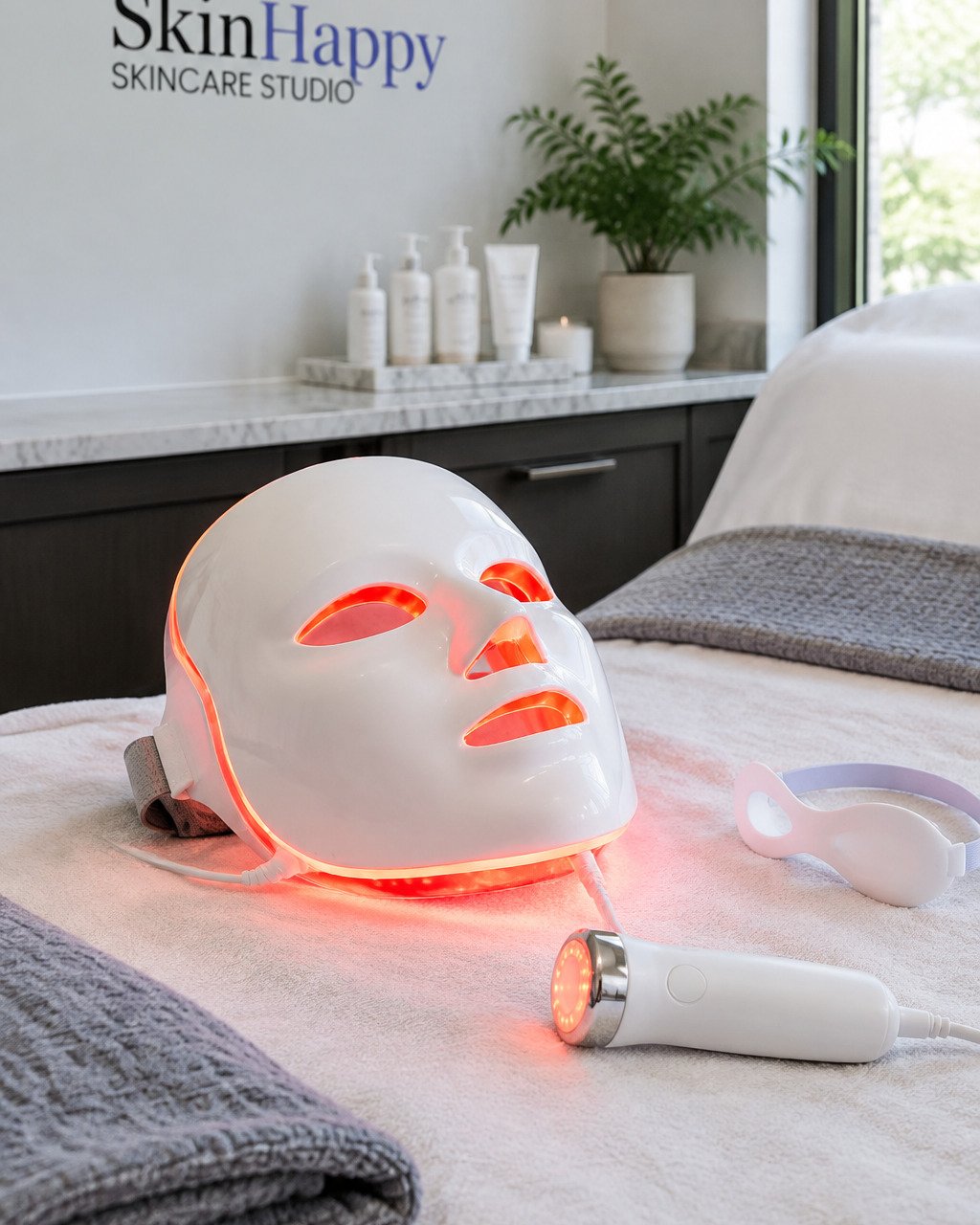
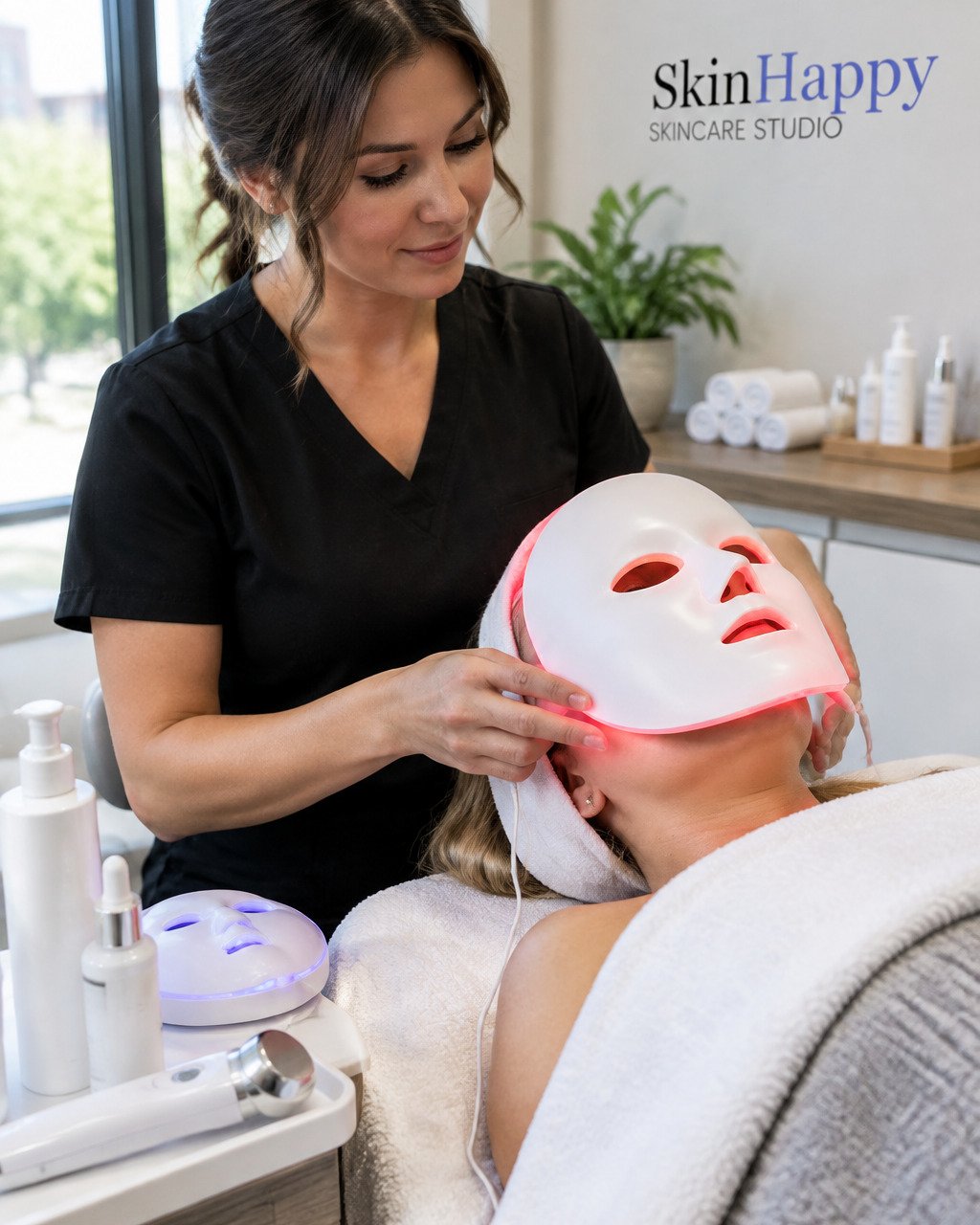
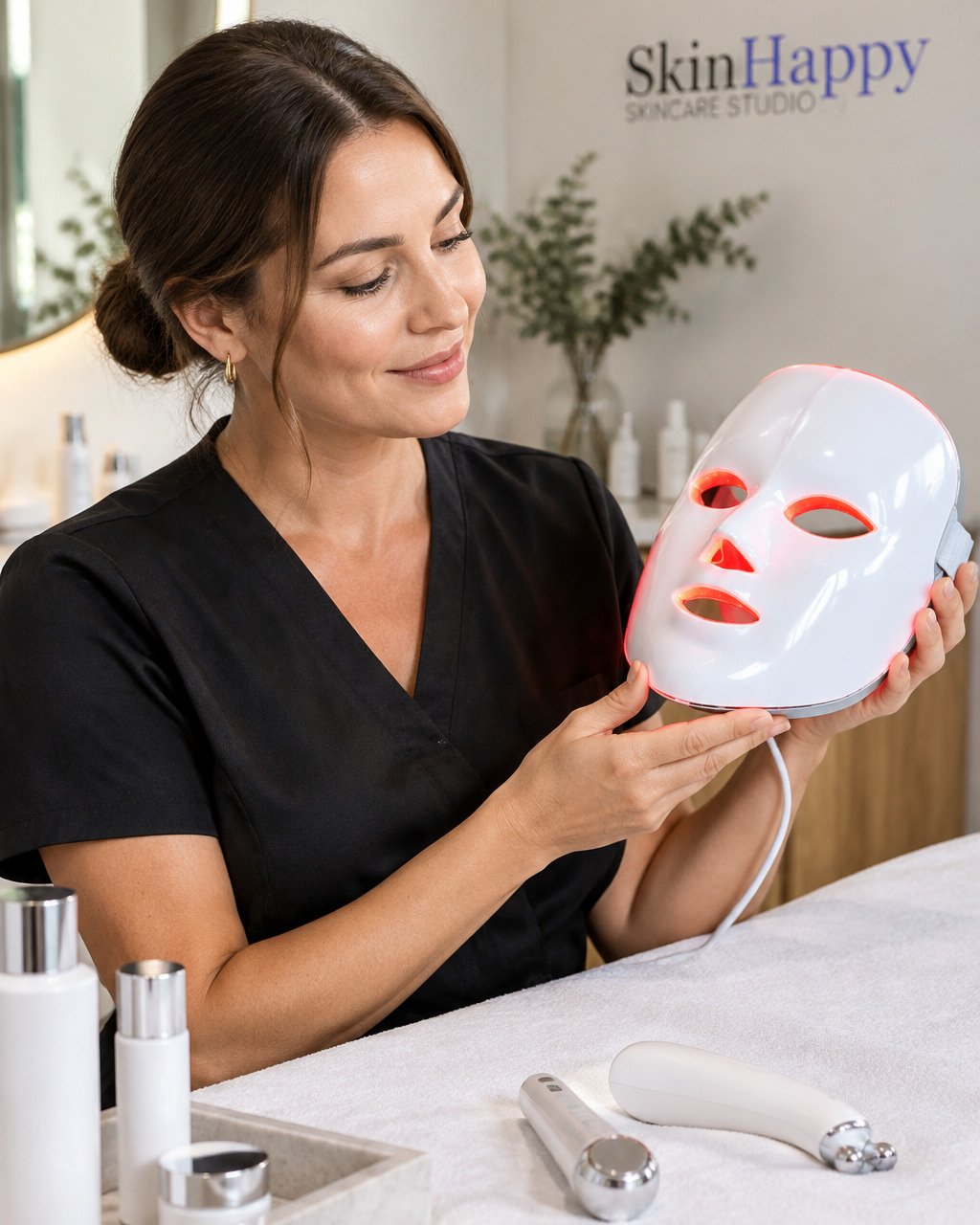
An LED face mask is a device that sits on your face and delivers light at specific wavelengths. It is an add-on step, not a replacement for the core three. You use it on clean, dry skin, then follow with moisturizer.
Where it fits:
Use it after cleansing and before moisturizer.
Follow the device's own timing instructions.
Start with fewer sessions per week and build up.
Skip it on nights you apply a strong active, to avoid overloading your skin.
If you want to see the actual Omnilux LED mask we describe here, you can view the Omnilux LED mask and compare it with other devices we carry.
Book a Skin Analysis at SkinHappy Studio
A simple skincare routine is a starting point, not a finish line. The hard part is knowing which three or four products suit your skin right now.
That is where a professional skin analysis helps. Our licensed estheticians build routines around your skin, not a template. We educate first and recommend only what you need, in a calm, private studio. No pressure, no product pushing.
We offer personalized skin regimen and product analysis, and advanced corrective treatments for aging, sun damage, and acne, in a concierge-style setting. If you are local to Greenville, book a consultation and we will map out a routine you can actually keep.
Ready to stop guessing? Get started with SkinHappy Studio and build a routine matched to your skin, with guidance from estheticians who explain every step.
Frequently Asked Questions
How do you build a basic skincare routine for beginners?
Begin with three products: a gentle cleanser, a moisturizer, and a broad-spectrum sunscreen. Use the cleanser and moisturizer twice daily and the sunscreen every morning. Run that routine for two to three weeks before adding anything else. Simple routines are generally easier to maintain consistently, which matters more than the number of steps. Once the basics feel automatic, add one targeted product at a time so you can tell what is helping.
What order should I apply skincare products?
Apply from thinnest to thickest. Cleanser first, then any toner or essence, then serum, then treatment, then moisturizer, and sunscreen last in the morning. Wait about a minute between layers so each one absorbs. If you use an LED face mask at home, follow the device instructions and place it on clean, dry skin before your serum and moisturizer. Keeping the same order every day makes a simple skincare routine easier to repeat and easier to troubleshoot when something feels off.
How long should I wait before judging whether a product works?
Give a new product four to six weeks of consistent use before deciding. Hydration and barrier comfort often improve within a week, while tone and texture changes take longer. Take a photo in the same light on day one so you have a baseline. If you see stinging, redness, or flaking that lasts more than a few days, stop the product rather than pushing through. Introducing one item at a time is the only reliable way to know which product caused a change.
Can I use an LED face mask if I have sensitive skin?
Many people with sensitive skin tolerate LED masks well because the treatment involves no acids or exfoliation. Start with the shortest session your device recommends and use it two to three times a week rather than daily. Patch test on your inner forearm first, then try a short session on one cheek. Skip the mask on days when your skin is already irritated, sunburned, or recovering from exfoliation.
Comments