9 Facial Prep Steps for Retinol Users
Table of Contents
Last Updated: November 1, 2026
Can You Get a Professional Facial on Prescription Retinol?
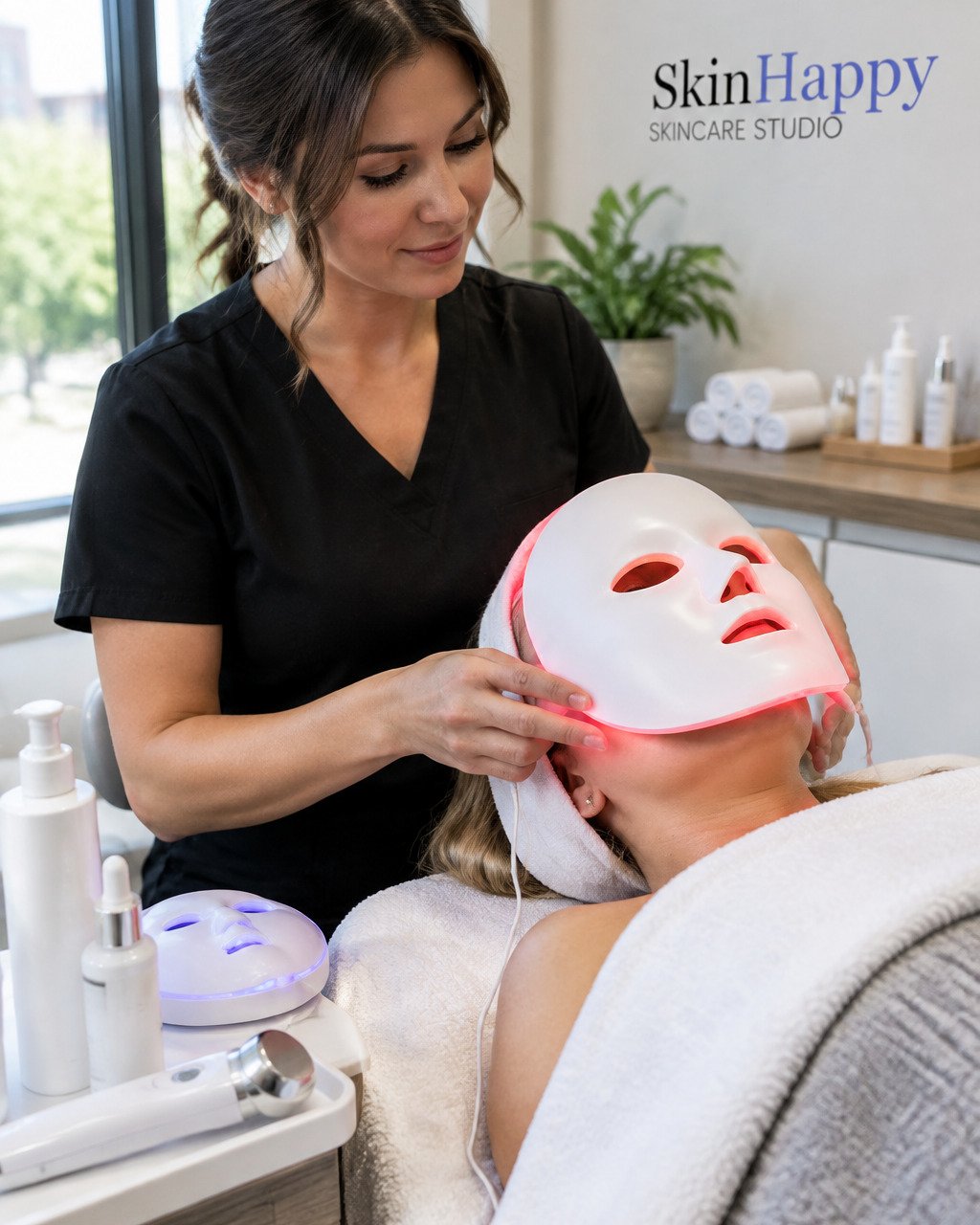
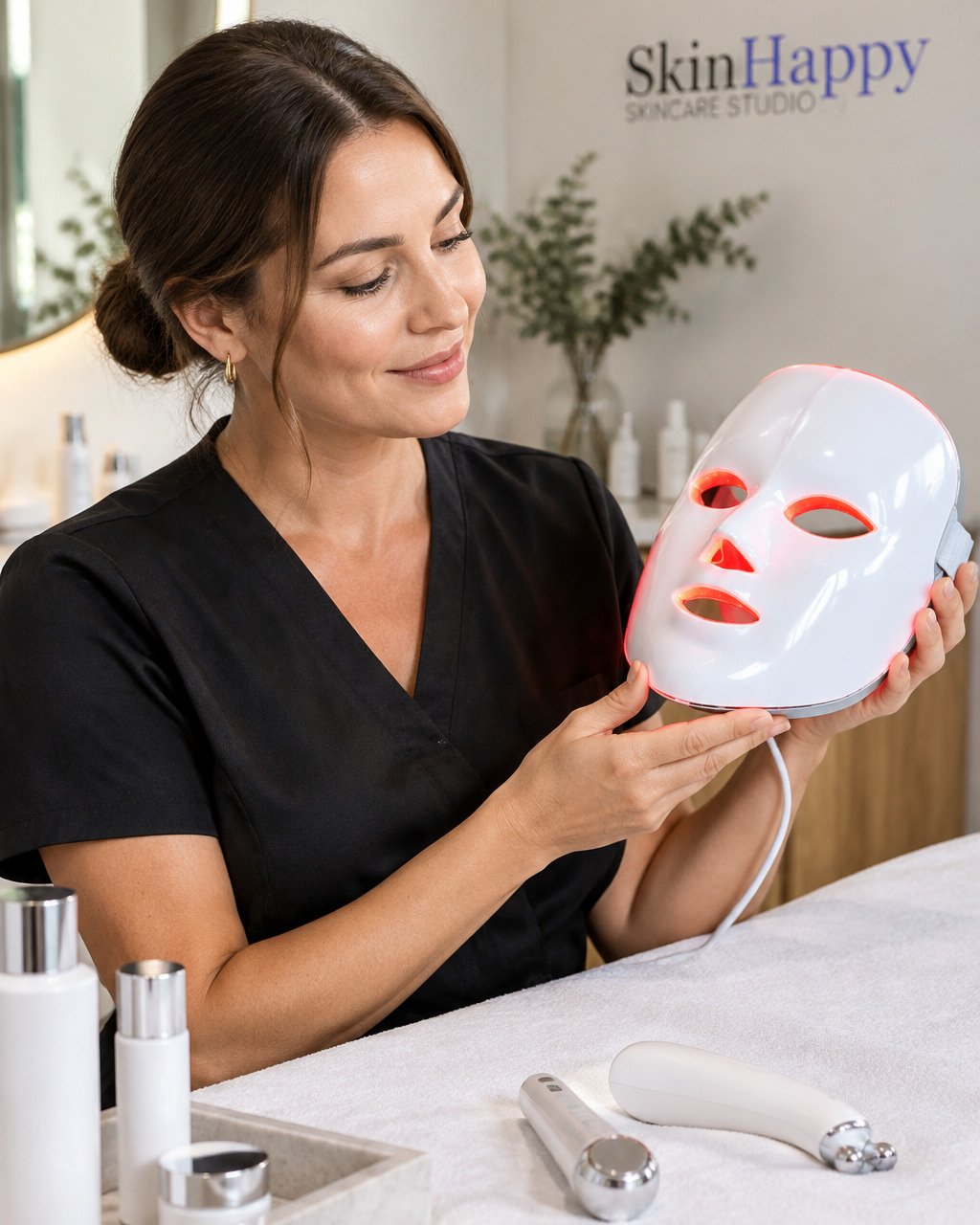
LED face masks are one of the easiest skin devices to add to a routine, and many people want to know how they fit alongside retinol. Many people who use prescription retinol want to know what is safe to layer with LED light. In general, LED light and retinol are considered compatible for most people, but the timing and irritation level matter.
LED masks use visible light wavelengths, typically red and near-infrared, and they can be introduced gradually alongside a retinol routine. They do not exfoliate the way a chemical peel does, which is why they tend to sit well with a retinol routine. Still, your skin needs time to tolerate both, so start slowly and watch for redness or stinging.
Start with one LED session per week and build up gradually
Pause if your skin feels hot, tight, or irritated
Keep your moisturizer and sunscreen in your routine every day
Prescription Retinol vs. Over-the-Counter Retinol: What Changes
Prescription retinoids are stronger than over-the-counter retinol, so they can make skin more sensitive. That sensitivity affects how you pair them with LED devices and other skin care.
How Long to Stop Tretinoin Before a Facial
There is no single number of days that fits every prescription retinoid user, because the right pause depends on the medication, its strength, how long you have used it, your current skin condition, and the intensity of the facial you are booking. Discuss the timing with your prescriber and your esthetician before booking. Establishing a consistent professional facial frequency helps ensure that your skin remains resilient enough to tolerate both your ongoing treatments and the exfoliation provided during your sessions.
Facial type | Typical pause guidance | Why it matters |
Gentle cleansing facial, no exfoliation | Often no pause needed; many people keep their normal schedule | Low mechanical and chemical stress on the barrier |
Hydrating or calming facial with massage | Commonly 1-2 nights before | Reduces chance of stinging during massage and product application |
Facial with enzyme or mild exfoliation | Commonly 2-3 nights before | Exfoliation plus a retinoid can compound barrier stress |
Facial with chemical peel (AHA/BHA) | Commonly 3-7 nights before, longer for stronger peels | Peels and retinoids both increase turnover and sensitivity |
Facial with extractions | Commonly 2-3 nights before | Extractions create micro-trauma that a retinoid can aggravate |
Microdermabrasion or physical resurfacing | Commonly 5-7 nights before | Abrasion on retinoid-thinned surface skin raises irritation risk |
LED light therapy session | Often no pause; reduce frequency if sensitive | Light does not exfoliate, so it is generally the gentlest add-on |
A few practical notes on reading that table:
Topical prescription retinoids are not the same as oral isotretinoin. Oral isotretinoin is a different medication with different considerations, and people taking it are usually advised to avoid many exfoliating or resurfacing treatments for a period set by their prescriber. Do not apply topical pause rules to an oral prescription.
Stronger concentrations and newer prescriptions usually need longer pauses. If you recently started or recently increased your strength, lean toward the longer end of any range.
Your current symptoms override the calendar. Active redness, peeling, burning, or stinging means your barrier is already stressed; reschedule rather than push through.
The esthetician's protocol matters. Ask what the treatment actually involves before you decide on a pause.
Pro Tip Bring your prescription to the booking conversation: the medication name, strength, how often you apply it, and the date of your last application. That information lets your esthetician adjust the treatment instead of guessing.
If your facial involves stronger exfoliation or resurfacing, contact your prescribing clinician before you change your retinoid schedule. They know your skin history and can tell you whether a pause is appropriate and for how long.
What to Avoid Before a Facial
Avoid these common mistakes in the days before an appointment:

Using strong exfoliants, scrubs, or at-home peel pads
Applying retinol on the same night as a new device session
Skipping sunscreen, since sun-exposed skin is more reactive
Trying a new active ingredient right before an appointment
Waxing or shaving the treatment area without telling your esthetician
Beyond the don'ts, the most useful thing you can do is disclose. A short checklist makes your appointment safer and your advice more specific: review how to prepare for a chemical peel safely if your treatment involves one.
What to tell your esthetician before booking
The exact name of your prescription retinoid and its strength
How often you apply it and the date of your last application
Any current symptoms: redness, peeling, burning, stinging, or tightness
Other actives in your routine, including acids, benzoyl peroxide, and vitamin C
Any recent waxing, shaving, or at-home device use
What the planned facial involves, so you can confirm the protocol together
Watch Out If you are unsure whether your skin is ready, rescheduling is almost always the lower-risk choice. A facial can be rebooked; an irritated barrier takes longer to settle.
When to contact your prescriber
Reach out to the clinician who prescribed your retinoid before stronger exfoliating or resurfacing treatments, or any time your skin is persistently irritated. They can confirm whether a pause is appropriate and how long it should last. Your esthetician and your prescriber are both part of the same plan, and coordinating between them is the most reliable way to avoid a setback.
When to Restart Retinol After a Facial
After a facial or LED session, give your skin a short rest before restarting retinol. Many people wait until redness and tenderness have settled, often one to two nights, though your skin's signals matter more than a fixed rule.
Breakouts or mild purging can occur when skin adjusts to retinol again. Purging is usually temporary, but persistent irritation or stinging means it is time to slow down. Reintroduce retinol at a lower frequency and build back up over several weeks.
Booking Your Next Facial at SkinHappy Studio
SkinHappy Studio is a boutique spa. We focus on education rather than pushing products.
Browse our facial services to see what is available, or contact us to talk through your skin goals. Visit our website to book or to get current information.
Frequently Asked Questions
Can you get a facial while using prescription retinol?
Often yes, but tell your esthetician about the prescription before booking. Prescription retinoids such as tretinoin can make skin more reactive to exfoliation, steam, extractions and certain massage products. Many estheticians will adjust the treatment, skip aggressive steps or ask you to pause the medication for a short period. If your prescribing clinician has given you specific instructions, follow those first and confirm the plan with both your clinician and your esthetician.
How long should you stop prescription retinol before a facial?
There is no single universal timeline, so ask your prescribing clinician and your esthetician for guidance. Many providers suggest stopping prescription retinoids for several days before a facial that involves exfoliation or extractions, though deeper or more intensive treatments may call for a longer break. Your esthetician can tell you which timeline fits the specific service you are booking, and your clinician can confirm whether a pause suits your skin.
What should I tell my esthetician about my retinol prescription?
Share the exact product name, strength, how often you apply it and when you last used it. Also mention any recent irritation, peeling, sensitivity or other treatments you have had. This information helps your esthetician choose safe products and techniques, decide whether to modify the service and know when to advise contacting your prescribing clinician.
When can you restart prescription retinol after a facial?
Many people restart once the skin has calmed and shows no lingering redness, tenderness or peeling from the facial. If you are unsure, check with your prescribing clinician before restarting, and consider restarting at a lower frequency and building back up gradually.

Comments