How to Build a Seasonal Skincare Routine That Works
Last Updated: November 2, 2026
Quick Summary
A seasonal skincare routine adjusts cleansing, hydration, exfoliation, and sun protection as temperature, humidity, and UV exposure shift. Change one product at a time, wait two weeks, and start transitions two to three weeks before the weather turns. Keep broad-spectrum SPF 30 or higher daily all year.
Start your seasonal transition two to three weeks before the weather actually turns, watching the forecast rather than the calendar.
Change your moisturizer texture first, adjust your cleanser next, and add or pause exfoliation last.
In winter, layer a humectant serum first, a richer cream second, and an occlusive balm at night on dry spots.
In summer, swap rich cream for a lightweight moisturizer or hydrating gel and exfoliate two or three times a week.
Reapply sunscreen every two hours outdoors, and sooner after sweating or swimming.
Table of Contents
Why Your Skin Needs a Seasonal Skincare Routine
Your skin does not stay the same all year, and neither should your routine. Readers starting from scratch can follow a skincare routine for busy professionals before layering in seasonal changes.
Weather changes what your skin deals with day to day:
Humidity drops in winter, so skin loses water faster
Heat and sweat rise in summer, which can clog pores and increase oil
UV exposure shifts with the season and your time outdoors
Your skin barrier, the outer layer that holds water in and keeps irritants out, takes the hit first. When it weakens, you see dryness, sensitivity, and dullness. A seasonal skincare routine protects that barrier through every shift.
How to Change Skincare Routine with Seasons
Changing your routine with the seasons comes down to timing and small steps, not a full product overhaul four times a year. Adjust one product at a time, give it two weeks, and watch how your skin responds.
The biggest mistake is the panic swap: skin acts up in the first cold week, someone buys five new products at once, and now they cannot tell what helped and what caused a reaction.
A calmer approach:
Note what changed first: tightness, oil, flaking, or breakouts
Change your moisturizer texture before anything else
Adjust your cleanser next if needed
Add or pause exfoliation last
Wait two weeks before the next change
Transition Timing and Gradual Product Changes
Start your seasonal transition about two to three weeks before the weather actually turns. Watch the forecast, not the calendar. When overnight temperatures start dropping, begin moving toward a richer moisturizer. When the first warm, humid stretch arrives, switch to lighter layers.
Your skin adapts slowly, and abrupt swaps trigger irritation; gradual changes let your barrier keep up.
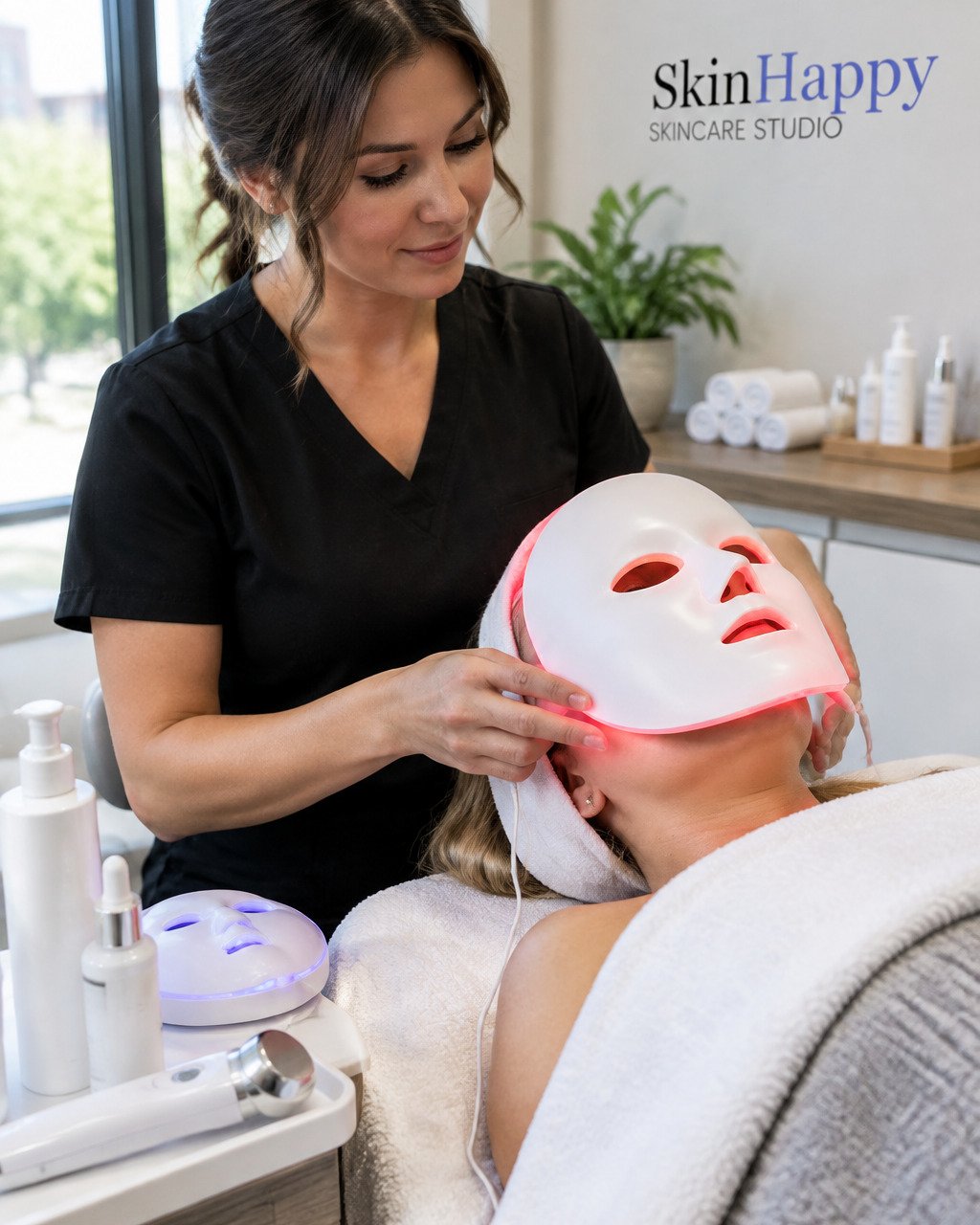
If you want professional eyes on the process, learning how to choose a custom facial that delivers results helps you match in-studio treatments to what your skin is doing right now.
A calm seasonal transition follows a set order and pace rather than a full product overhaul.
Step | What to do | Timing |
1 | Note what changed first: tightness, oil, flaking, or breakouts | First |
2 | Change your moisturizer texture before anything else | Next |
3 | Adjust your cleanser if needed | After moisturizer |
4 | Add or pause exfoliation last | Last |
5 | Wait before the next change | Two weeks |
Start seasonal transition | Watch the forecast, not the calendar | Two to three weeks before weather turns |
Winter Skincare Routine: Barrier Protection and Hydration
A winter skincare routine should focus on barrier protection and water retention. Cold air outside and dry heat inside pull moisture from your skin all day.

Winter Hydration and Barrier Protection
Switch to a creamy, gentle cleanser and cut back on hot water, which strips your skin barrier.
Layer hydration in this order:
Humectant first: a hydrating serum that pulls water into the skin
Moisturizer second: a richer cream that seals it in
Occlusive at night: a balm on the driest spots
A hydrating serum can fit this step by supporting barrier hydration without a heavy feel. Add a humidifier to your bedroom and keep exfoliation to once a week or less.
Summer Skincare Routine: Lightweight Hydration and Sun Protection
A summer skincare routine flips the priorities: lightweight hydration, oil control, and serious sun protection. Heat and humidity increase sweating and oil, so heavy creams start to feel like a film on your face.
Summer Lightweight Hydration and Sun Protection
Swap your rich cream for a lightweight moisturizer or a hydrating gel. It still supports your skin barrier but lets skin breathe.
Cleansing needs care in summer. You may shower and sweat more, but over-cleansing strips the barrier and triggers more oil.
Exfoliation helps clear dead skin cells and keeps pores from clogging. Keep it to two or three times a week.
Sun protection is the non-negotiable part. Consistent defense against ultraviolet radiation serves as the primary foundation for those who wish to maintain aesthetic results over the long term.
Spring and Fall Skincare Adjustments
Spring and fall call for transition routines rather than a hard reset. Both seasons swing week to week, and your routine has to absorb that swing without irritating your barrier.
Spring adjustments:
Move from cream to lotion as humidity rises, but keep a richer night cream on hand for cold snaps
Restart regular exfoliation to clear winter buildup, start at once a week and build to two or three
Add antioxidants like vitamin C in the morning to defend against rising UV and pollen-season environmental stress
Fall adjustments:
Return to a richer moisturizer as overnight temperatures drop, usually two to three weeks before the first hard frost
Reduce exfoliation if skin starts feeling tight, and pause it entirely during any flaky or irritated stretch
Reintroduce barrier-supporting ingredients early, ceramides, panthenol, and glycerin, before skin starts complaining
Match the Transition to Your Skin Type
A single seasonal checklist cannot fit every face. The same October week calls for different moves depending on your skin type:
Dry skin: shift to a cream cleanser and a richer moisturizer earlier, and add an overnight balm on cheeks and around the mouth. Dry skin usually needs the fall transition to start first.
Oily skin: keep gel or lotion textures longer, and resist the urge to over-moisturize just because the calendar says fall. Oily skin often does best with a lightweight hydrating layer plus a mattifying sunscreen.
Combination skin: treat zones separately. A richer cream on cheeks and a lighter lotion on the T-zone is the most common pattern that works.
Use Your Climate, Not the Calendar
Two people in the same month can need opposite routines. Humidity, altitude, indoor heating and cooling, and regional UV exposure all change what your skin needs:
Humid climates: lighter textures work longer into fall, and spring may call for oil control before it calls for extra moisture.
Dry or high-altitude climates: richer moisturizers and a bedroom humidifier help in both spring and fall, and sun protection matters more because UV intensity rises with altitude.
Heavily heated or air-conditioned spaces: treat indoor air as its own season. If you spend the day in dry conditioned air, your skin may need winter-style hydration even in spring.
A practical rule: watch the forecast and your skin, not the calendar. When overnight temperatures start dropping, move toward a richer moisturizer; when the first warm, humid stretch arrives, switch to lighter layers.
If you want professional eyes on the process, learning how to choose a custom facial that delivers results helps you match in-studio treatments to what your skin is doing right now.
Daily Sunscreen Routine: The One Step That Never Changes
A daily sunscreen routine is the one step that stays the same all year. UV exposure does not take a season off, and sun damage builds quietly across every month, not just beach days. Health organizations generally recommend daily sunscreen use as a key way to limit UV damage, and the UV index can help you decide when to reapply or seek shade.
Here is the simple version:
Apply broad-spectrum SPF 30 or higher every morning, about 15 minutes before you go outside
Use enough to cover your face and neck
Reapply every two hours outdoors, and sooner after sweating or swimming
Wear it indoors near windows and on cloudy days
Pair it with antioxidants for extra defense
Reapplication Mechanics That Actually Work
Reapplying is where most routines fall apart. A few practical patterns make it stick:
Over makeup: use a sunscreen stick, a powder SPF, or a tinted SPF cushion rather than trying to rub cream over foundation
On bare skin: a lotion or gel sunscreen reapplies cleanly and doubles as a light hydrating layer
On the go: keep a stick in your bag or car and reapply to nose, cheeks, and forehead on long outdoor days
Read the UV Index Before You Decide
The UV index is a simple decision tool. As a general guide:
0-2 (low): daily sunscreen is still worth it, especially near windows or at altitude
3-5 (moderate): reapply every two hours outdoors and seek shade around midday
6-7 (high): prioritize shade, a hat, and sunglasses, and reapply diligently
UV intensity rises with altitude and reflects off water, sand, and snow, so a ski day or a lake day can deliver more UV than a mild summer afternoon.
Pick a Format You Will Actually Use
The best sunscreen is the one you will reapply. Consider the trade-offs:
Lotion or gel: best for full-face coverage and easy reapplication on bare skin
Stick: convenient over makeup and on the go, but easy to under-apply, swipe several passes
Tinted SPF: good for coverage and for people who prefer a makeup-like finish, but check that the tint matches your skin tone
A tinted sunscreen can cover this step with broad-spectrum protection and a bit of coverage.
Frequently Asked Questions
How should I change my skincare routine for each season?
Start with your cleanser and moisturizer, since those two steps drive most of the difference. In winter, switch to a gentle cleanser and a richer moisturizer that supports the skin barrier. In summer, use a lightweight moisturizer and rinse with lukewarm water after sweating. Spring and fall are transition windows, so change one product at a time and give your skin a week or two before judging results. Keep sunscreen at SPF 30 or higher every day, all year.
Should I change my moisturizer when the seasons change?
Yes. Moisturizer is the easiest lever to pull because humidity and temperature changes shift how much water your skin loses. Cold, dry air calls for a richer moisturizer with barrier-supporting ingredients, while hot, humid weather suits a lightweight moisturizer that will not feel heavy under sunscreen or makeup. If you have oily or sensitive skin, make the swap gradually and watch for irritation rather than changing cleanser, moisturizer and exfoliant all at once.
How often should I update my skincare routine?
Two to four times a year is enough for most people, timed to the seasonal transition rather than a calendar date. Introduce one new product at a time and give it about two weeks before adding another, so you can tell what is working. If you use exfoliation or vitamin C, adjust frequency with the weather: less in winter when skin is dry, and more careful sun protection in summer when UV exposure rises.
Does weather affect your skin even if I stay indoors?
Yes. Indoor heating and air conditioning dry out the air, and temperature changes between indoors and outdoors stress the skin barrier. Humidity, dry air and harsh weather all affect skin hydration regardless of how much time you spend outside. That is why winter skincare routine advice focuses on barrier protection and summer skincare routine advice focuses on lightweight hydration, even for people who work indoors.
Seasonal shifts are easier to handle when someone who knows your skin is guiding the changes. At SkinHappy Studio, our licensed estheticians build personalized routines around your skin type and goals, using aesthetic-grade products and a concierge approach that fits busy schedules. We educate first and never push products. Get started with SkinHappy Studio and book a consultation to build a seasonal skincare routine that actually fits your skin.

Comments